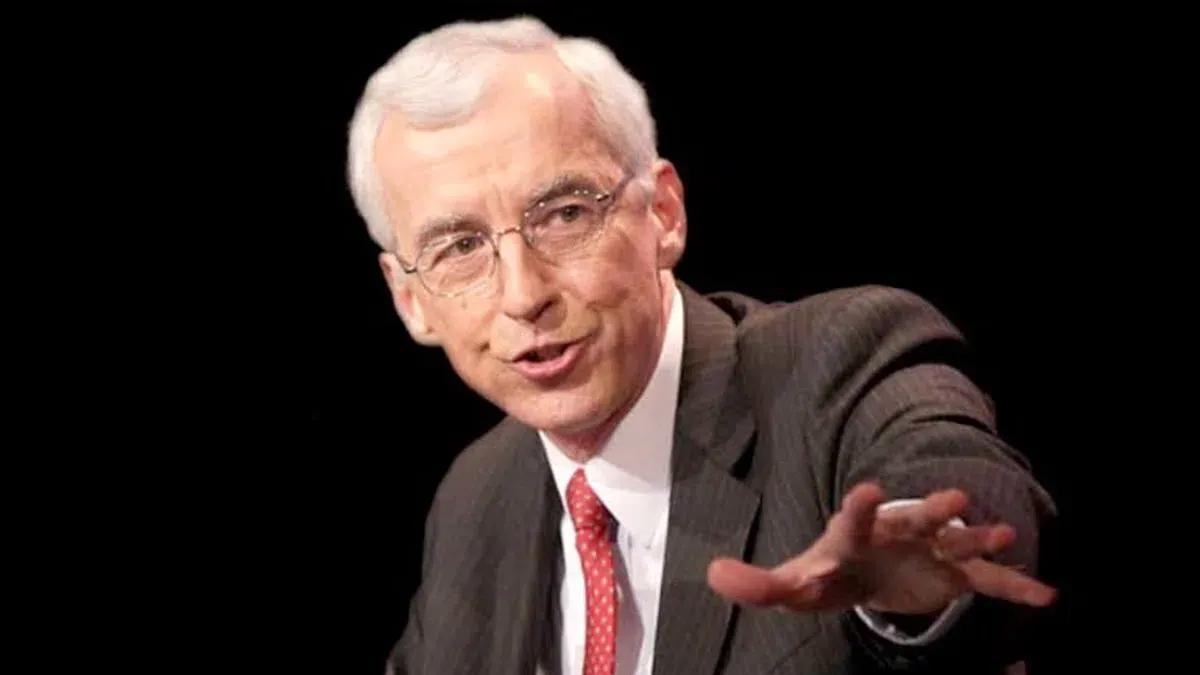
Following Shenzhen summit among China, Russia, and the United States leaders, TABNAK reached out to Professor Paul Pillar former CIA intelligence analyst to discuss the issue with him.
Here is the full text of the interview:
To what extent does the Shenzhen summit among China, Russia, and the United States signal the emergence of a new understanding among the three major powers on managing the international order? Does this meeting mark the beginning of strategic cooperation, or is it primarily an effort to manage their differences and prevent further escalation of global tensions?
This meeting was mostly a glorified photo opportunity, as reflected in the fact that there was very little substance in the communique that came out of it. Xi benefitted from the image of being the leader and host of a meeting with what had been the two superpowers of the Cold War. Putin benefited by being seen, despite Russia's troubles, as still being on a par with the two most powerful states of the current world. Trump had a chance to try to look like a statesman despite all his domestic troubles. It would be hard to point to any outcome of this meeting that would count either as strategic cooperation or management of differences.
Although Iran was not explicitly mentioned in the final joint statement, issues such as the security of the Strait of Hormuz, the uninterrupted flow of energy supplies, and preventing Iran from acquiring nuclear weapons featured in Trump's remarks. What message does this send to Tehran? Can we speak of an emerging understanding between Washington and Beijing regarding how to deal with Iran?
Even though there is some parallel interest between the United States and China regarding energy exports from the Persian Gulf, a true understanding between those two powers on how to deal with Iran is unlikely. China is part of Iran's lifeline in coping with the U.S. blockade. Moreover, China is not unhappy to see the United States stuck in a quagmire resulting from its war on Iran--which, among other things, diverts U.S. military forces from being able to confront China in the East Asia/Pacific region.
Gven China's dependence on energy imports and the strategic importance of the Strait of Hormuz to global oil markets, has the security of this waterway become a shared strategic concern for the major powers, extending beyond the bilateral relationship between Iran and the United States? To what extent could this situation strengthen Iran's geopolitical leverage, while also imposing constraints on Tehran's ability to use the Strait of Hormuz as a strategic bargaining tool?
As noted above, differences on other issues, especially between China and the United States, have prevented a united front among nations that share an interest in the uninhibited export of oil through the Strait of Hormuz. This fact works to Iran's advantage, since it does not face a unified opposition to what it is doing to inhibit navigation in the strait. The story involving this situation, and how it ultimately may be resolved, is still primarily, though not exclusively, a bilateral matter between Iran and the United States.
What does the simultaneous presence of the leaders of the United States, China, and Russia, alongside their emphasis on UN reform, respect for national sovereignty, and cooperation in maintaining international peace, tell us about the future of the international order? Is China emerging as a new center of global diplomacy, or will the United States remain the decisive power in the international security architecture?
The idea of these three powers dividing the world into spheres of interest and collectively dominating everyone else is how Trump would like to see international affairs, and Russia and China are happy to go along with that idea. This is bad news for everyone else, and for the international order as we have known it, especially since this triumvirate includes two autocracies (China and Russia) and one aspiring autocrat (Trump). There will be resistance to this whole notion, however, certainly from the Europeans and also from Asian nations that do not want to be part of an exclusive sphere of interest of either China or the United States. There will not be any single center of global diplomacy. China clearly has more influence than it did even a few years ago, and the United States, especially after years of Trump, has less than it once did.

Comments